Frontage
You show up on Google Maps. Do you have a real website?
A pin on Google Maps is how a lot of local work starts. That listing is the first touch. What happens next is a decision — whether you look like a real business, whether you do the work they need, and whether calling you is easy. That decision happens on a website.
Why isn’t a Google Business Profile enough?
Someone searches, taps a pin, and reads a listing. A Google Business Profile is how they find you. It is not, by itself, the place they decide to call.
The listing can show a name, a category, and a phone number. The questions that decide the call — hours, what you actually do, whether you cover their area, who is behind the name — need a page that is yours.
A listing without a real door
A map listing on its own gets you found and then offers a phone number. The questions that decide the call go unanswered.
Without a website you own, that first touch has nowhere solid to land. A social profile or a directory page is rented space. It can change, move, or close without your say.
That is why a Google Maps listing needs a website, in plain language: Maps finds you; the site closes.
What is a real website after a Google Maps listing?
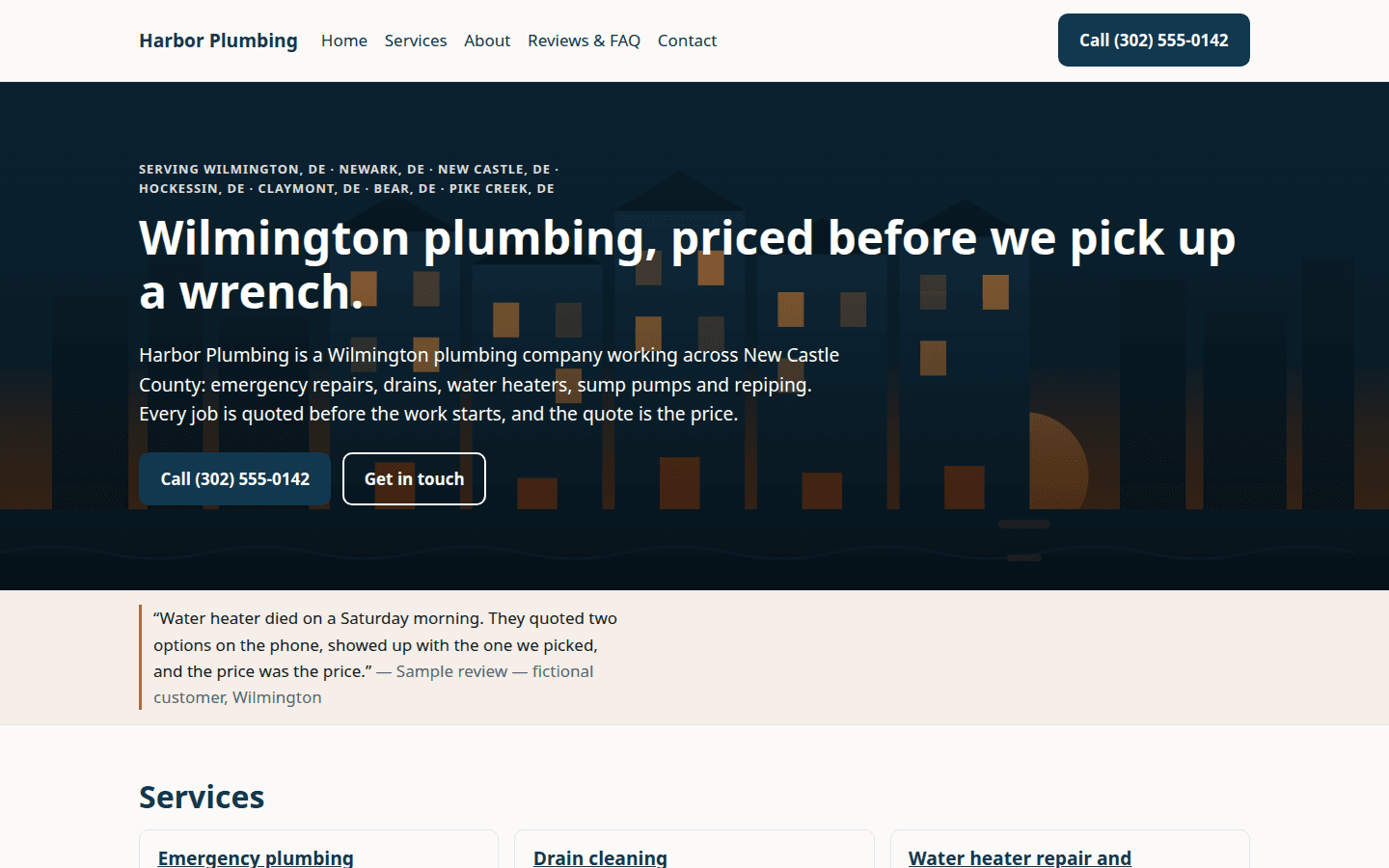
Five pages, built from one record of your facts: home, services, about, FAQ, and contact. Phone-first — the fastest thing a visitor can do is call you.
Services, hours, service area, and the questions customers actually ask get collected once. Every page is built from that record, so the hours in your footer cannot disagree with the hours on your contact page.
That is the website after a Google Maps listing. It is not a ranking claim, and not a promise about where the listing appears.
DIY builder or hand it off?
If you want to build and run the site yourself, a DIY builder is cheaper and you should use it. Frontage is not a DIY website builder for contractors.
We build the five pages from your facts and keep them current under Presence Care — for owners who get most work by phone and do not want another chore.